
With the holidays coming up, I wanted to share some ideas about something almost everyone has in their home, despite possibly not having any children. Whether you are going to visit aunts, grandparents, or friends, almost everyone has a Deck of Cards.
Many people think the only thing that you could do with the cards would be to teach them poker or play goldfish, but these are some other ideas, including some gross motor movement activities to help tire the kiddos out!
Quiet activities with a deck of cards:
– Sorting the cards. Sort the cards into card categories and put them in order numerically, by color, or by their suit. Doing this activity will work on counting, sorting, visual motor, fine motor, dexterity, and organizational skills.
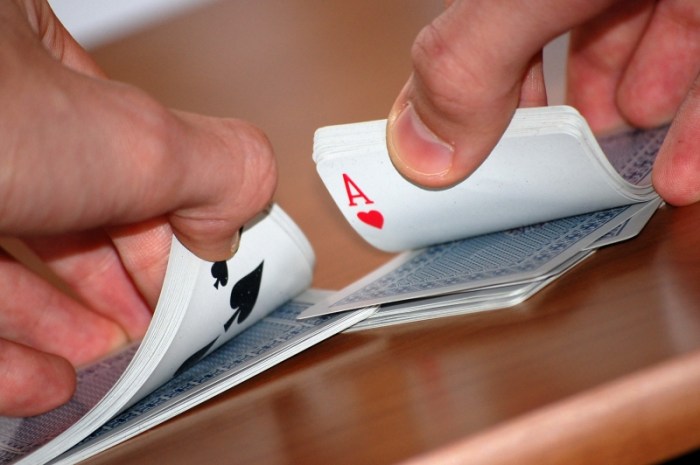
– Shuffling the cards. Teach your kiddos how to shuffle the cards. You can go basic and show them how to pass out one card at a time, or go more advanced and show them how to actually shuffle and mix the cards together. These activities work on fine motor coordination, dexterity, and hand strength which will help with handwriting. Here is a link showing How to Shuffle cards.
– Play simple card guessing games. You can play simple guessing games with cards, like higher or lower, red or black, war, and go fish. Doing these activities will increase interaction, participation, turn taking, fine motor skills, problem solving, and math skills.
Movement activities with a deck of cards:
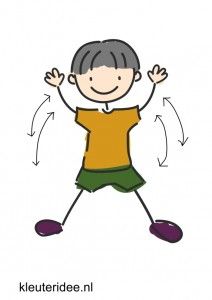
-Counting movement activities with the cards. Decide on a short movement activity (like high jumps, jumping jacks, leg kicks, or get the kids to make up there own movements). Then whatever card they pick, that’s how many times they have to do it (you can use the face cards as breaks). If you have 2 children you can assign one red and one black and if their card color comes up, they have to do it! With this you can work on following directions, gross motor coordination, exercise, imaginative play, and it will hopefully tire them out a bit!
– 52 card pick up: Everyone knows this game. You just drop the cards on the ground and the kids have to pick them up. Not many kids like to do this though, (I think it is because it is too much like clean-up time) but if you make it a game, you can get some great participation! Have them pick them all up in categories like, 1 suit at a time, numerical order, or by color. If you have multiple children, assign them something different, like one picks up the diamands and spades, and the other does hearts and clubs. It adds an extra challenge that kids usually respond well to. This activity can help with visual perceptual and visual motor skills, as well as counting, sorting, and fine motor skills.
– Hide and seek with the cards. Hide cards in easy to find or harder areas around the room. Kids have to go thru the room and find all 52! (Just be sure you have 52 to start.) This works on motor planning, visual motor skills to visually perceptual skills, and counting.
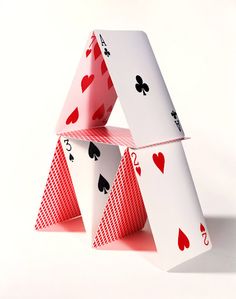
– Building a tower with cards. This is a more advanced skill. It will work on dexterity, fine motor control, visual motor skills, and patience. Here is a link on how to build a tower with cards.
Michelle Higginson OTR/L Pediatric Occupational Therapist


 The OT Toy Stretcher